
 Thought Leadership
The Girl Child Education Gap in West Africa: Health, Power, and the Fight for Every Classroom Seat
Prof. Adenike Grange
Founder, AdeGrange Child Foundation
In West Africa, a girl's access to education is one of the strongest predictors of her children's survival. Yet millions of girls remain out of school. The reasons are complex — and so must be the solutions.
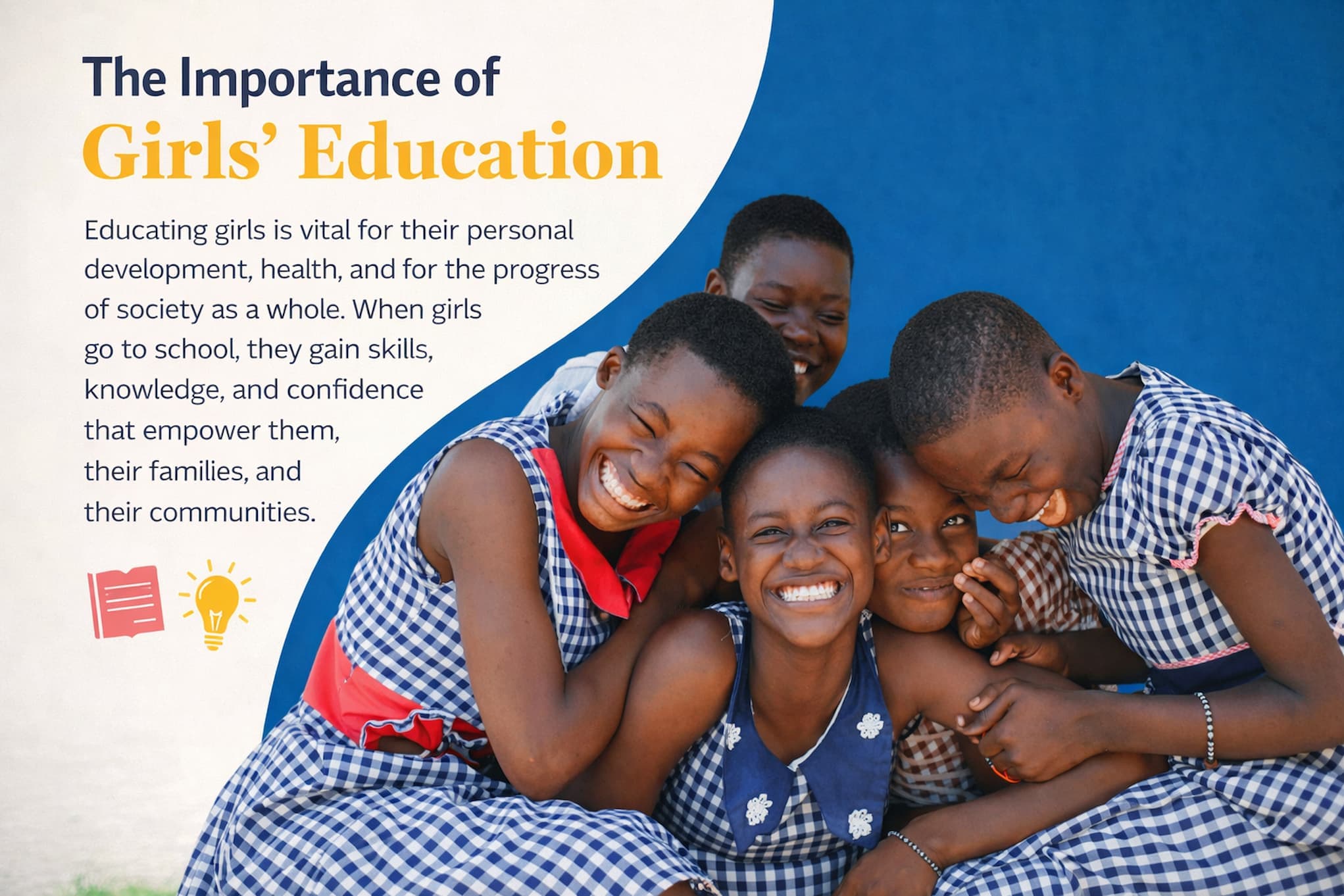
There is perhaps no intervention in development that delivers broader health and social returns than educating girls. Educated women are more likely to seek antenatal care, deliver in health facilities, space their pregnancies, immunise their children, and recognise danger signs in illness. They earn more, invest more in their families, and are better positioned to resist early marriage.
In West Africa — where girls' educational outcomes remain among the lowest in the world — closing the gender gap in education is not just an equity issue. It is a public health imperative.
The Scale of the Challenge
UNICEF estimates that more than 9 million girls of primary school age are out of school in West and Central Africa — more than in any other region in the world. In Nigeria, more than 3 million girls are currently not in school. In Niger — West Africa's northern neighbour — only 35% of girls complete primary education.
The consequences ripple through every health indicator. In communities with low female literacy, maternal mortality rates are consistently higher. Adolescent pregnancy rates — which carry serious health risks for both mother and child — are closely correlated with whether girls stay in secondary school.
Why Girls in West Africa Leave School
The reasons girls leave school in West Africa are neither simple nor uniform. They vary by geography, religion, economic status, and community norms — which is why blanket policy solutions often fail.
Economic barriers are among the most direct. School fees, the cost of uniforms, and the opportunity cost of keeping a daughter in school rather than contributing to household labour or income are real constraints for poor families — especially when the perceived returns to girls' education are low.
Early and forced marriage removes millions of girls from school across the Sahel and northern Nigeria, where child marriage rates remain among the highest in the world. Once married, girls are rarely able to return to education.
Safety and distance matter more for girls than for boys. Walking several kilometres to school on unsafe roads is a risk families are often unwilling to take with daughters. In communities without secondary schools, girls frequently stop at primary level because boarding away from home is not considered appropriate for girls.
Menstrual health is an underappreciated barrier. In schools without private toilets, running water, or access to sanitary products, menstruation causes absenteeism that accumulates into dropout. This is directly addressable — and yet rarely addressed.
Quality matters too. In contexts where teachers routinely miss school, where girls face harassment from male peers or teachers, and where curriculum is disconnected from girls' lives, enrolment alone is not enough.
What Works
The evidence base on girls' education interventions in West Africa has grown substantially in the past decade. Approaches with strong evidence include:
- Conditional and unconditional cash transfers to families that keep daughters in school
- School-based sanitation upgrades — private toilets, handwashing stations, and the provision of sanitary products
- Community engagement to shift norms around girls' education, particularly involving religious leaders and traditional rulers
- Mentorship and girls' clubs that provide safe spaces within schools
- Addressing teacher conduct through stronger accountability mechanisms and female teacher recruitment in girl-heavy schools
At AdeGrange Child Foundation, we have seen directly how health education in schools creates safer environments for girls. When a girl understands her body, has a trusted adult she can speak to at school, and attends a facility that does not shame her for menstruating, she is more likely to stay.
The classroom is one of the most powerful health interventions we have. The fight to keep every girl in one is worth everything.
Support Our Mission
AdeGrange Child Foundation works to protect the health and futures of mothers and children across Africa. Join us.