
 Health & Tips
Malaria and Children Under Five in West Africa: What Every Parent Must Know
AdeGrange Health Team
Community Health Specialists
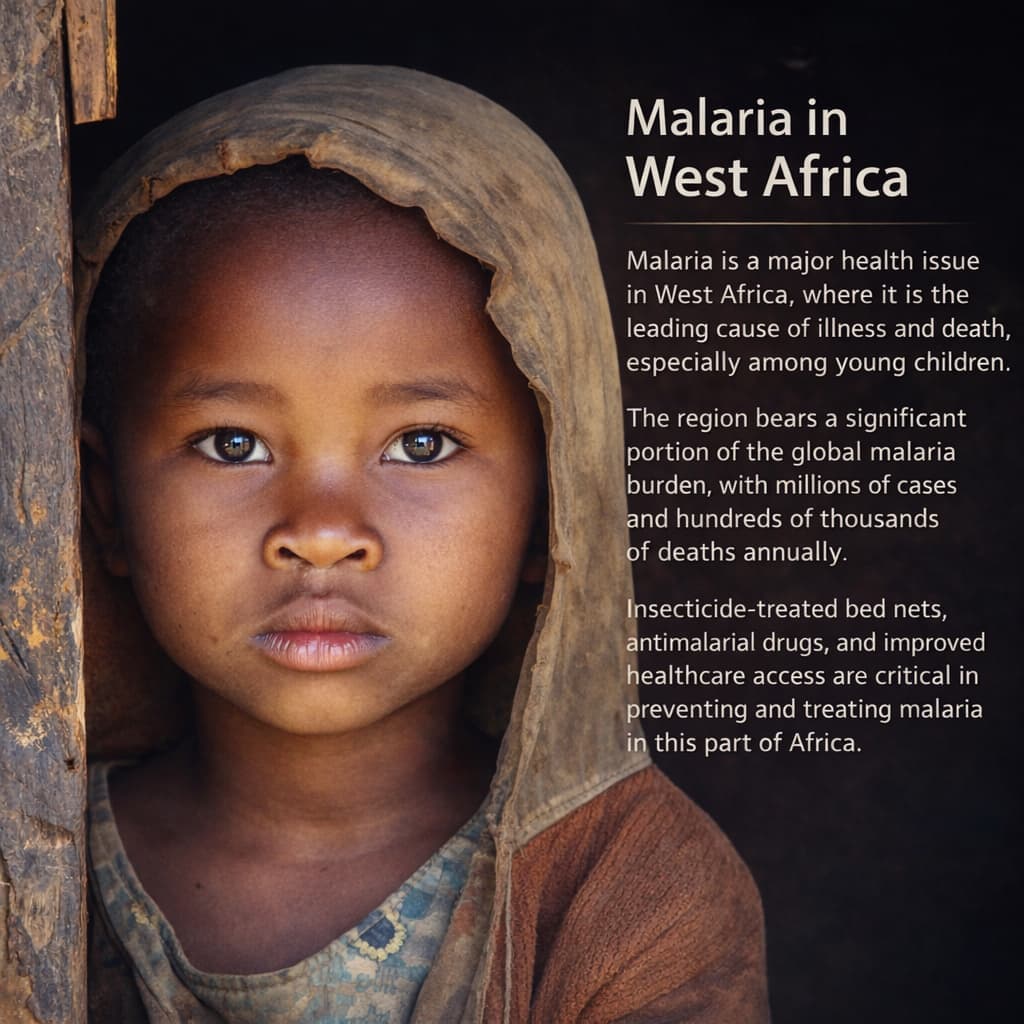
Malaria kills a child in sub-Saharan Africa every two minutes. In West Africa — where Nigeria, Ghana, and Côte d'Ivoire bear the heaviest burden — it remains the leading cause of death in children under five. Here is what parents can do.
West Africa carries a disproportionate share of the world's malaria burden. Nigeria alone accounts for roughly 27% of all global malaria deaths — more than any other country. In the region as a whole, the disease kills hundreds of thousands of children under five every year, and leaves millions more with lasting effects on brain development and school performance.
Understanding malaria is the first step toward preventing it.
How Malaria Kills Children So Quickly
In adults with some acquired immunity, malaria often presents as a severe but survivable fever. In young children — especially those under two who have not yet built immunity — it can progress to life-threatening complications within hours.
Cerebral malaria, where the parasite crosses into the brain, causes seizures, coma, and death or permanent neurological damage in many cases. Severe anaemia, caused by the destruction of red blood cells, is another major killer. Children with severe malaria anaemia may need emergency blood transfusions that are simply not available in many communities.
The speed of deterioration is what makes malaria so dangerous. A child who wakes with a mild fever can be critically ill by evening.
Warning Signs That Demand Immediate Action
Seek care immediately if your child has:
- Fever above 38°C that does not improve within 24 hours
- Rapid breathing or difficulty breathing
- Seizures or convulsions
- Inability to drink, feed, or stay awake
- Yellowing of the eyes or skin
- Unusual paleness of the lips, gums, or inner eyelids
Do not wait to see if symptoms resolve on their own. In young children, waiting is dangerous.
Prevention: The Basics That Save Lives
Insecticide-treated bed nets (ITNs) are the single most cost-effective malaria prevention tool available. Used correctly — tucked under the mattress every night — they can reduce child malaria deaths by more than 50%. Nigeria's national malaria programme distributes free nets through health facilities and community campaigns. If you have not received one, ask at your nearest health centre.
Indoor residual spraying (IRS) involves treating the inside walls of homes with long-lasting insecticides. Several state governments in Nigeria run IRS campaigns; check with your local government health department.
Intermittent preventive treatment (IPTp) is recommended for pregnant women — taking sulphadoxine-pyrimethamine at antenatal visits significantly reduces malaria in pregnancy, which also protects the developing baby.
Clearing stagnant water around your home removes mosquito breeding sites. Old tyres, uncovered water containers, and blocked gutters are common culprits.
Treatment: Acting Fast and Finishing the Course
The first-line treatment for uncomplicated malaria in Nigeria is artemisinin-based combination therapy (ACT), available free or subsidised at government health facilities and PHCs. It is essential to complete the full course even if symptoms improve quickly — stopping early allows parasites to survive and become resistant.
Never use leftover or unverified medication, and avoid chloroquine alone, which parasites in West Africa are now widely resistant to.
Malaria is preventable and treatable. The tragedy is when it kills because prevention was not in place or treatment came too late.
Support Our Mission
AdeGrange Child Foundation works to protect the health and futures of mothers and children across Africa. Join us.