
 Program Stories
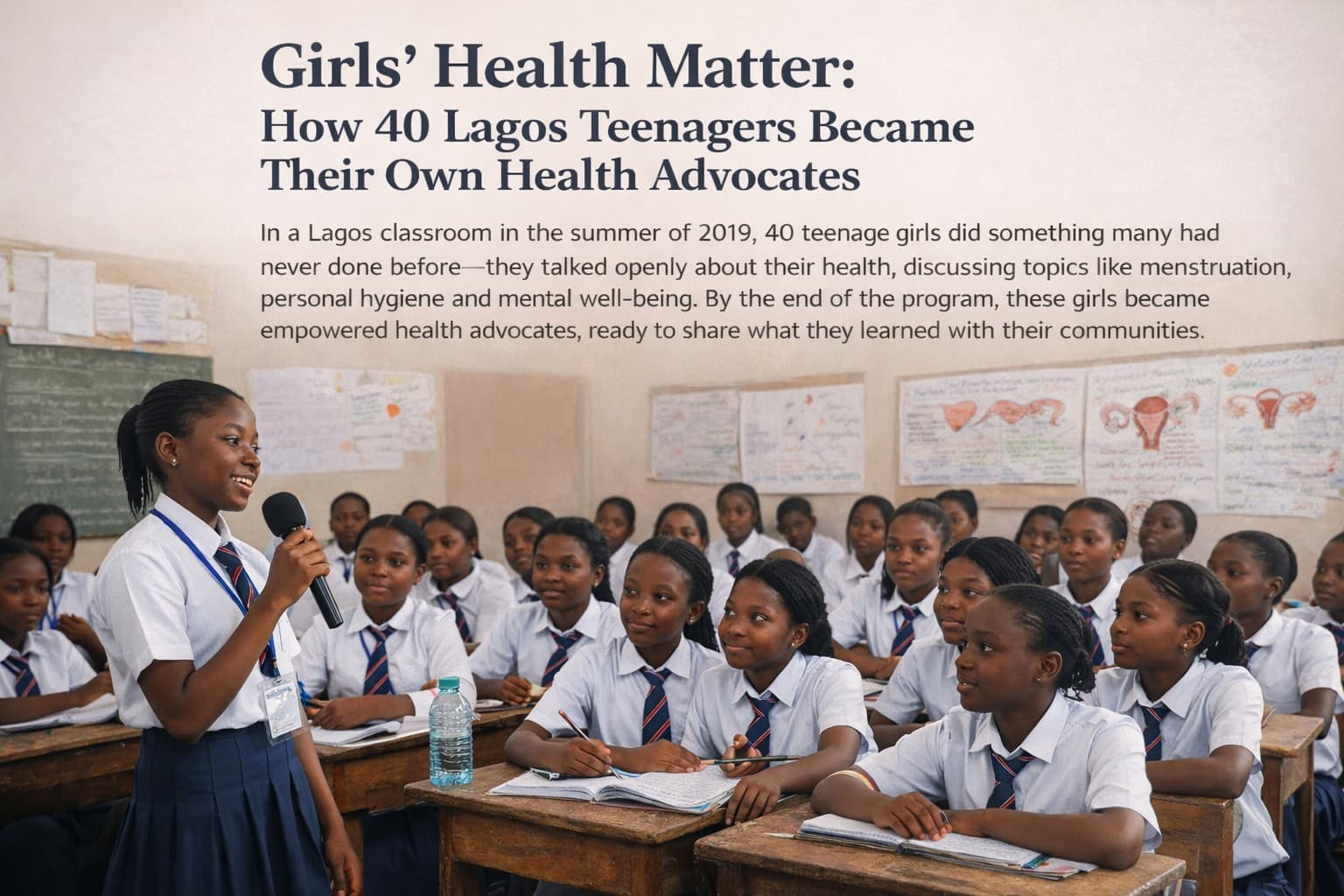
Girls Health Matter: How 40 Lagos Teenagers Became Their Own Health Advocates
AdeGrange Programme Team
Programmes & Impact
In a Lagos classroom in the summer of 2019, 40 teenage girls did something many had never done before — they talked openly about their bodies. What followed changed more than just their health knowledge.
Afolake was 15 years old when she joined the Girls Health Matter programme in the summer of 2019. She had been missing school one week every month for almost a year — not because she was ill, but because she had no access to sanitary pads and no one to talk to about what she was experiencing.
By the end of the week-long programme, she had not only the knowledge to manage her menstrual health but the words to explain to her younger sister why she should never feel ashamed of her body. She also had a bag of sanitary products donated by the programme's community partners.
Afolake's story is not unusual. It is Nigeria.
Adolescent Girls in Lagos: The Health Knowledge Gap
Nigeria is home to more than 20 million adolescent girls. In Lagos — Africa's largest city — rapid urbanisation has created communities where girls are physically close to health facilities but culturally distant from the care they need. Reproductive health topics are often considered taboo in school and at home. Many girls navigate puberty, menstruation, and the pressures of adolescence in near-total isolation.
The consequences are measurable. Teenage pregnancy rates in Lagos remain significant. Menstrual absenteeism — missing school due to period-related challenges — affects learning outcomes. And girls who do not understand their own bodies are more vulnerable to exploitation.
The Programme Design
Girls Health Matter was carefully designed around the specific context of Nigerian adolescent girls. The five-day intensive programme, held in a trusted community space in Lagos, brought together 40 girls aged 13 to 17.
Sessions were facilitated exclusively by female health professionals and peer educators — a deliberate choice to create safety. Topics covered included:
- Menstrual health, hygiene management, and the normalisation of periods
- Understanding puberty and bodily changes
- Nutrition for adolescent girls, including iron-rich foods common in Nigerian diets
- Mental health, stress, and the pressures facing Nigerian girls
- Safe relationships and assertiveness — saying no without losing relationships
An anonymous question box collected the questions girls were too embarrassed to ask aloud. The answers, read and addressed by facilitators at the end of each day, generated some of the most powerful discussions of the programme.
The Impact
Post-programme evaluations showed that 94% of participants increased their knowledge of reproductive health. Six months later, follow-up conversations revealed something more meaningful: the girls had become informal health educators in their own communities.
"I told my mother what I learned about anaemia and she started adding more ugu to our soup," one participant shared. "She didn't know that's why she was always tired."
Another girl had set up a small peer group at her school where girls could ask questions they couldn't raise in class. She was 16.
What We Learned
Girls Health Matter confirmed something we believe deeply at AdeGrange: when you invest in a girl, she does not keep that investment to herself. She multiplies it. The challenge is creating the conditions in which she feels safe enough to receive it in the first place.
We are working to expand the programme to additional Lagos communities and to partner with schools to integrate menstrual health education into the curriculum.
Support Our Mission
AdeGrange Child Foundation works to protect the health and futures of mothers and children across Africa. Join us.