
 Program Stories
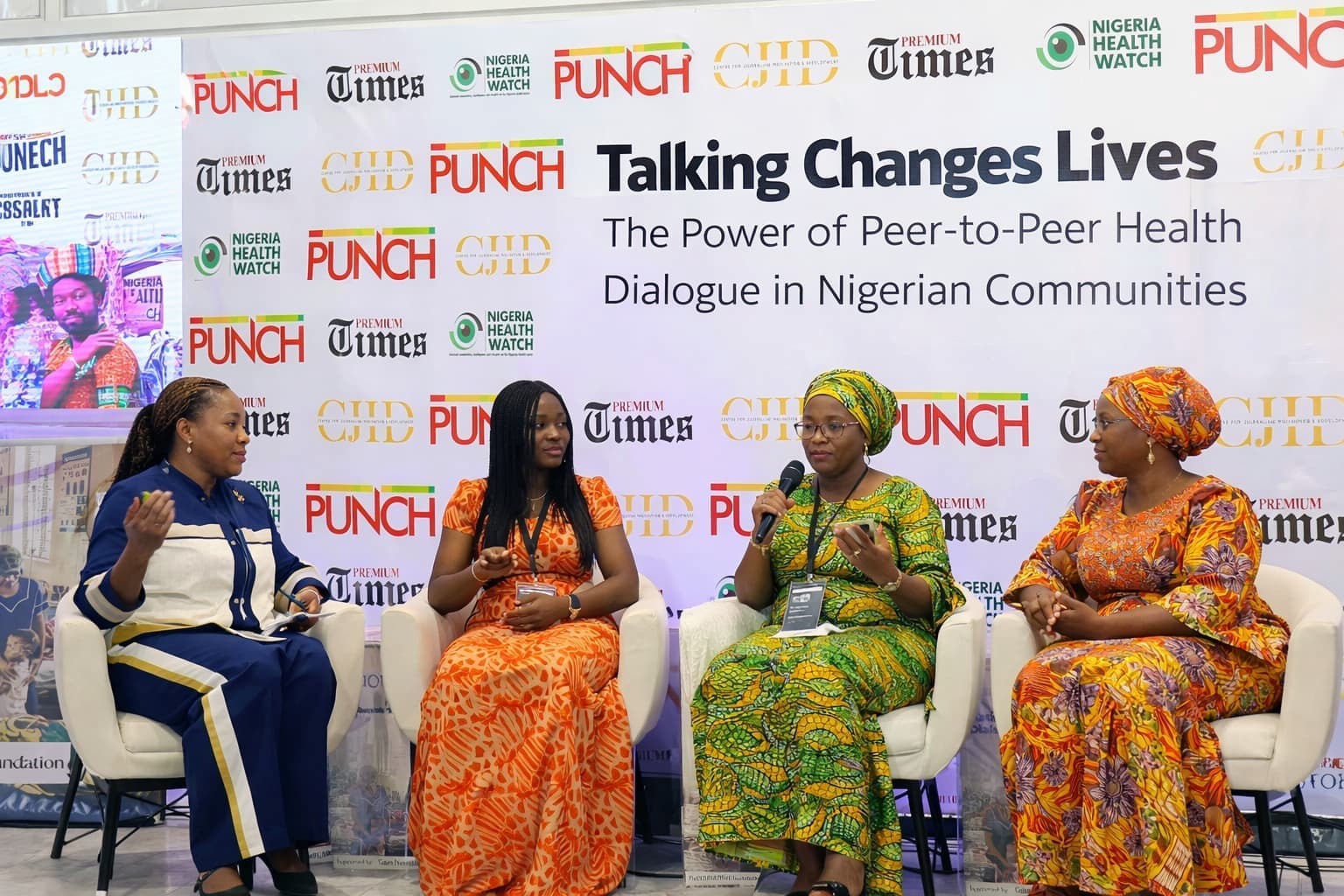
Talking Changes Lives: The Power of Peer-to-Peer Health Dialogue in Nigerian Communities
AdeGrange Programme Team
Programmes & Impact
When health information comes from a trusted neighbour rather than a clinic poster, it lands differently. Our peer-to-peer dialogue programme in Lagos showed just how far that difference can reach.
In the summer of 2017, AdeGrange Child Foundation ran an experiment. Instead of bringing health professionals into a Lagos community to deliver information, we trained local women to have conversations with their neighbours about maternal and child health.
The results reshaped how we think about community health education.
The Logic of Peer Education
Nigeria's primary healthcare system reaches fewer than 50% of its intended population. The gap is filled — imperfectly, but persistently — by informal networks: market women, church groups, mosque congregations, neighbourhood associations, and the relationships between mothers on the same street.
Information that travels through these networks is trusted in ways that institutional messaging rarely is. A woman is more likely to change her behaviour based on what her childhood friend says than based on a government leaflet or a health worker she met once.
Peer-to-peer health education builds on this reality rather than fighting it.
Training the Trainers in Lagos
We selected 20 women from three Lagos communities — Mushin, Ajegunle, and Surulere — to serve as peer health educators. The selection criteria were simple: they were respected in their communities, had time to engage, and were willing to learn and share.
Training covered:
- The danger signs of pregnancy and early childhood illness
- When and where to seek care (including the nearest functioning PHCs)
- The importance of antenatal attendance and facility delivery
- Breastfeeding support and complementary feeding for infants
- Child immunisation schedules under Nigeria's National Programme on Immunisation
- How to facilitate a conversation, not lecture
Training was delivered in Yoruba and Pidgin English to ensure accessibility. Role plays, storytelling, and visual aids were used throughout.
What Happened Next
Over three months, the 20 peer educators reached more than 300 women in their communities through one-on-one conversations, small group meetings, and community events. Topics were not prescribed — educators responded to what their neighbours actually wanted to know.
The conversations surfaced concerns that formal surveys rarely capture: the shame women felt about difficult pregnancies, the pressure from mothers-in-law to deliver at home, the cost of transport to the nearest maternity ward, the fear of what a positive HIV test would mean for a marriage.
Follow-up data collected six months later showed a 34% increase in antenatal attendance among women who had regular contact with a peer educator, compared to a comparison community. Immunisation uptake also rose. But perhaps more importantly, women reported feeling less alone.
Replicating What Works
The peer dialogue model has since been integrated into all of AdeGrange's community programmes. The key lesson is not complicated: health information is only as powerful as the relationships through which it travels. In Nigeria, those relationships are already there. Our job is to equip the women at the centre of them.
Support Our Mission
AdeGrange Child Foundation works to protect the health and futures of mothers and children across Africa. Join us.